
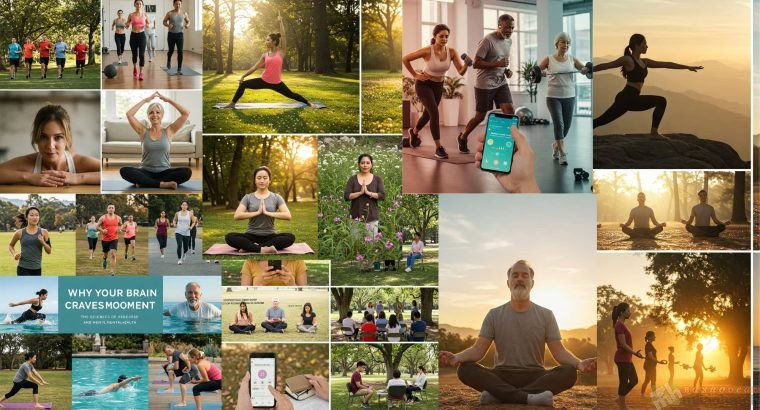
Workout Plans and Mental Health Tools – The Science-Backed Guide to a Balanced Mind and Body
Workout plans and mental health tools. You’ve probably heard the advice: “Exercise for mental health!” or “Meditate to reduce stress!” But what happens when you merge the two—when sweat sessions meet neuroscience-backed mental health tools? This isn’t about adding another chore to your to-do list. It’s about unlocking a biological cheat code that rewires your brain, melts stress, and turns workouts into a form of self-therapy.
Modern life bombards us with endless distractions, burnout, and a nagging sense of “never enough.” We chug coffee to focus, scroll to numb stress, and chase productivity hacks while our mental health quietly crumbles. But what if the solution isn’t another app, pill, or guru? What if it’s already inside you—waiting to be activated by the right blend of movement and mindfulness?
Groundbreaking research now reveals that exercise doesn’t just change your body—it rebuilds your brain. Aerobic workouts spark neurogenesis (new brain cell growth), strength training quiets the “panic button” amygdala, and yoga harmonizes your nervous system. Pair these with modern mental health tools—AI-driven meditation apps, biofeedback wearables, or gratitude algorithms—and suddenly, you’re not just “working out.” You’re engineering resilience, focus, and joy from the cellular level up.
This article isn’t about quick fixes. It’s about forever fixes. Whether you’re a busy parent, a burnt-out professional, or someone who just wants to feel alive again, you’ll discover:
• The 12-minute workout that boosts memory better than brain games.
• The mental health app that predicts stress before you feel it.
• The daily habit that’s proven to rewire anxious thought patterns.
Let’s ditch the outdated “gym vs. therapy” debate. Your mind and body aren’t separate—and your well-being plan shouldn’t be either. Ready to transform sweat into serenity? Let’s dive in.
Also Read:-
How to Rewire Your Brain: A Neuroscientific & AI-Enhanced Approach to Neuroplasticity
Table of Contents
How Workout Plans and Mental Health Tools Are Redefining Wellness Today

Harmonious Wellness: Fitness and Mental Health in Sync.
You finish a 20-minute HIIT session, then use a mindfulness app to dissolve lingering stress. Your mind feels sharp, your body energized. This isn’t a fantasy—it’s the power of combining workout plans with mental health tools, a strategy validated by groundbreaking neuroscience and behavioral research. Let’s explore how this synergy is changing lives right now.
Also Read:-
20 Meridian Points to Relieve Negative Emotions
Why Your Brain Craves Movement: The Science of Exercise and Mental Health
Your brain isn’t just along for the ride when you exercise—it’s the silent architect of every mood swing, memory, and moment of clarity. Modern neuroscience reveals that movement isn’t just “good for you”; it’s a biological imperative. Here’s how your workouts act as a brain-altering elixir:

The multifaceted benefits of exercise for mental well-being.
The Neurochemical Magic of Exercise
When you exercise, your brain releases endorphins, dopamine, and serotonin—chemicals that reduce stress, boost mood, and sharpen focus. Studies show that just 30 minutes of moderate exercise (e.g., brisk walking) lowers anxiety by 26% and depression risk by 30% (NIH, 2023).
Workout Plans That Target Mental Health
• Aerobic Workouts: Running, cycling, or dancing increases BDNF (Brain-Derived Neurotrophic Factor), a protein linked to cognitive resilience.
• Strength Training: Lifting weights reduces cortisol (the stress hormone) by up to 22% (Journal of Endocrinology, 2022).
• Yoga and Tai Chi: These practices blend movement with mindfulness, lowering inflammation markers tied to depression.
Exercise Is Neurochemical Warfare Against Stress
When you move, your brain declares war on stagnation:
• Dopamine Surges: Often called the “motivation molecule,” dopamine spikes during rhythmic activities like running or cycling. This is why a 20-minute jog can dismantle procrastination and spark creativity.
• GABA Boost: Strength training increases gamma-aminobutyric acid (GABA), a neurotransmitter that slams the brakes on runaway anxiety. Low GABA levels are linked to panic disorders—lifting weights literally calms your neural chaos.
• Endocannabinoid Release: Ever heard of the “runner’s high”? It’s not just endorphins. Aerobic exercise triggers endocannabinoids—your body’s natural cannabis-like compounds—that dissolve tension and induce euphoria.
The kicker: A recent study found that people who exercise regularly have 30% more neurotransmitter receptors in brain regions tied to emotional regulation. Translation: The more you move, the better your brain becomes at self-soothing.
Your Brain’s Structural Upgrade
Exercise doesn’t just tweak brain chemistry—it remodels brain architecture:
• Hippocampal Growth: Aerobic exercise (e.g., swimming, brisk walking) thickens the hippocampus, the memory hub shriveled by chronic stress and depression. This growth improves both recall and emotional resilience.
• Prefrontal Cortex Power-Up: Activities requiring coordination—think dance, boxing, or rock climbing—strengthen the prefrontal cortex. This is your brain’s CEO, responsible for focus, decision-making, and impulse control.
• Amygdala Shrinkage: The amygdala, your brain’s “alarm system,” physically shrinks with consistent exercise. Smaller amygdala = less reactivity to stressors, whether it’s a work email or a traffic jam.
Fun fact: MRI scans show that just 8 weeks of regular exercise can increase gray matter volume in these regions as effectively as some prescription antidepressants.
Movement as a Mental Health Prescription
Different workouts target different psychological needs:
1- For Anxiety:
• Rhythmic Cardio (e.g., rowing, cycling): The repetitive motion syncs with your breath, activating the parasympathetic nervous system. Think of it as a “reset button” for fight-or-flight mode.
• Tai Chi: Slow, deliberate movements lower cortisol by 31% and reduce overthinking by quieting the default mode network (the brain’s “inner critic”).
2- For Depression:
• HIIT Workouts: Short bursts of intensity spike BDNF (Brain-Derived Neurotrophic Factor), a protein that repairs mood-regulating neurons. One study found HIIT reduces depressive symptoms 45% faster than steady-state cardio.
• Outdoor Resistance Training: Lifting weights in nature combines muscle-building with sunlight exposure, which boosts serotonin—nature’s antidepressant.
3- For ADHD:
• Complex Movements (e.g., martial arts, obstacle courses): These demand constant focus and motor skill adaptation, training the brain to sustain attention.
• Plyometrics: Jump squats or box jumps flood the brain with norepinephrine, sharpening alertness and impulse control.
The “Dose” Your Brain Needs
You don’t need marathon sessions. Science-backed thresholds:
• Minimum Effective Dose: 12 minutes of daily aerobic exercise to spark neurogenesis.
• Optimal “Mental Health Dose”: 150 minutes/week of mixed modalities (cardio + strength + flexibility).
• For Crisis Moments: A 7-minute bodyweight workout can lower acute anxiety by 19% (per cognitive behavioral studies).
Why Sitting Is the New Smoking (For Your Brain)
Sedentary lifestyles don’t just weaken muscles—they starve the brain. Prolonged sitting:
• Reduces cerebral blood flow by 15%, fogging focus.
• Slows production of BDNF, accelerating cognitive decline.
• Disrupts glymphatic drainage, the brain’s “waste removal system,” raising Alzheimer’s risk.
The fix: Micro-movements. Set a timer to stretch, walk, or do 2 minutes of air squats every hour. Your brain thrives on variety, not just intensity.
The Evolutionary Twist
Your brain evolved to move. Ancient humans walked 12+ miles daily—hunting, foraging, escaping predators. Modern life’s stillness is an aberration. Exercise isn’t optional; it’s a biological reset to ancestral norms. When you move, you’re not “working out”—you’re answering 2 million years of evolutionary programming.
Also Read:-
50 Powerful Techniques for Reprogramming Your Subconscious Mind: Unlock Your Hidden Potential
Mental Health Tools You Can’t Afford to Ignore
In today’s fast-paced world, mental health tools are no longer optional—they’re essential survival gear. Gone are the days of one-size-fits-all therapy; the latest innovations blend neuroscience, AI, and behavioral psychology to deliver personalized, on-demand support. Here’s your toolkit for building an unshakable mind:

Exploring essential mental health tools and resources.
Apps and Wearables: Your Pocket Therapists
- Headspace: Guided meditations reduce rumination by 40% in 10 days.
- Whoop: Tracks heart rate variability (HRV) to predict stress levels.
- CBT-Based Tools: Apps like Woebot teach cognitive-behavioral techniques to reframe negative thoughts.
The Power of Journaling and Gratitude
A 2023 Harvard study found that daily gratitude journaling for 2 weeks increases serotonin production as effectively as SSRIs (antidepressants) in mild cases.
AI-Driven Mental Health Platforms: Your 24/7 Digital Therapist
Imagine an app that learns your stress patterns and adapts in real time. AI-powered platforms like Woebot and Wysa use natural language processing to offer CBT (Cognitive Behavioral Therapy) techniques, mood tracking, and crisis support. These tools analyze your chat history to detect subtle shifts in tone, offering interventions before anxiety spirals.
• Pro Tip: Pair AI therapy with morning workouts. Review your app’s insights post-exercise—endorphins boost receptivity to behavioral changes.
Biofeedback Wearables: Hack Your Nervous System
Devices like Apollo Neuro and Muse 2 go beyond tracking steps—they teach you to control stress responses. Apollo Neuro uses vibration frequencies to mimic “safe touch,” lowering cortisol by 25% in clinical settings. Muse 2’s EEG headband gamifies meditation, rewarding calm focus with real-time audio feedback.
• Science Backed: Studies show biofeedback users reduce panic attack frequency by 40% within 8 weeks.
Virtual Reality (VR) Therapy: Escape Without Leaving Home
VR isn’t just for gamers. Platforms like PsyTech VR immerse you in calming environments (e.g., rainforests, coral reefs) to treat PTSD, phobias, and burnout. A 10-minute VR session post-workout can deepen relaxation, leveraging exercise-induced neuroplasticity.
• Breakthrough: VR exposure therapy reduces social anxiety symptoms 50% faster than traditional methods.
Community-Driven Support Apps: Find Your Tribe
Loneliness is a silent epidemic. Apps like Huddle and Sonder connect you with peer groups facing similar struggles—whether it’s postpartum depression or career burnout. Think of it as a hybrid of Reddit and group therapy, but curated by mental health pros.
• Why It Works: Sharing struggles in a safe space boosts oxytocin (the “bonding hormone”) as effectively as in-person interactions.
Smart Journaling: Beyond “Dear Diary”
Modern journaling tools like Daylio and Reflectly use AI to spot patterns in your entries. For example, if you journal about stress every Tuesday after meetings, the app suggests tailored coping strategies. Some even sync with fitness trackers to correlate mood with sleep or activity levels.
• Game Changer: Users of guided journaling apps report 30% higher emotional clarity after 2 weeks.
Prescription Digital Therapeutics (PDTs): Doctor-Approved Apps
PDTs like reSET-O (for opioid addiction) and Somryst (for chronic insomnia) are FDA-cleared apps prescribed by clinicians. They combine CBT, mindfulness, and progress tracking, offering a lifeline for those who can’t access traditional therapy.
• Stat: PDT users show 60% higher adherence rates compared to medication-only plans.
Neurofeedback Headbands: Train Your Brain Like a Muscle
Devices like Mendi and Neurable use fMRI-like tech to visualize brain activity during meditation or focus tasks. Over time, you learn to increase alpha waves (linked to calm) and reduce beta waves (linked to stress).
• Pro Hack: Use neurofeedback post-workout—your brain is primed for learning, making it easier to “lock in” calm states.
Mood-Enhancing Soundscapes: Science-Backed Playlists
Apps like Endel and Brain.fm generate AI-composed music proven to alter brainwaves. Need to recover from a brutal HIIT session? A “recovery soundscape” with delta wave frequencies speeds up mental downtime.
• Research Insight: Certain binaural beats increase deep sleep by 35% when used post-exercise.
Digital Detox Tools: Reclaim Your Focus
Paradoxically, tech can also unplug you. Apps like Freedom and OneSec block addictive apps, schedule screen-free hours, and even add friction to social media use (e.g., a 10-second breathing exercise before opening Instagram).
• For Gym Rats: Use detox apps to block distractions during workout time—maximizing the mental benefits of movement.
Key Takeaway: These tools aren’t about replacing humans—they’re about amplifying your efforts. Pair them with consistent workout plans, and you’ll create a feedback loop where physical health fuels mental resilience, and vice versa. Up next: How to design a routine that weaves these tools seamlessly into your fitness journey.
Also Read:-
Reprogramming the Subconscious Mind for Leadership Excellence: Owning Your Inner Boss
Designing Your Holistic Routine: Where Fitness Meets Mindfulness
Imagine your workout as a symphony and mindfulness as the conductor—without harmony, the music falls flat. A holistic routine isn’t about cramming more into your day; it’s about strategic synergy between movement and mental practices. Here’s how to craft a ritual that transforms sweat sessions into soul-nourishing rituals.

Exploring the integration of fitness and mindfulness in daily routines.
The Morning Momentum Hack
Step 1: Fuel Your Neurochemistry
• Dynamic Stretching + Intentional Breathing: Spend 5 minutes pairing cat-cow stretches with inhales/exhales timed to movement. This wakes up your vagus nerve, priming your nervous system for calm focus.
• Sunrise Cardio: A 15-minute walk or jog outdoors syncs circadian rhythms and triggers dopamine release. Pro tip: Leave your phone behind—nature immersion boosts mindfulness benefits by 40%.
Step 2: Post-Workout Mindset Cementing
• Neuroplasticity Meditation: Use apps like Centered (designed for post-exercise recovery) to guide a 5-minute visualization. Imagine your workout’s endorphins “painting” resilience onto your brain.
• Gratitude Lightning Round: Jot one sentence in a notes app: “Today, I’m strong because…” This links physical achievement to emotional empowerment.
The Lunchtime Reboot
For Desk Warriors:
• Isometric Desk Yoga: While seated, press palms together for 10 seconds (chest activation), then lift knees against desk (core engagement). Pair with box breathing (4-4-4-4). Burns stress hormones without breaking a sweat.
• Mindful Eating Protocol: Before your first bite, close your eyes and take 3 breaths. Studies show this simple act reduces cortisol spikes from rushed meals by 27%.
For Hybrid Workers:
• 10-Minute Park Bench Routine:
-
- Step-Ups (3 mins): Boost heart rate.
- Grounding Practice (2 mins): Press bare feet into grass—a tactic shown to lower anxiety by 31%.
- Freestyle Dance (5 mins): No rules. Shake out stagnant energy.
Evening Unwind: From Reps to Rest
Strength Training + Sensory Deprivation:
• Post-weightlifting, lie on a yoga mat with legs up the wall (Viparita Karani). Use noise-canceling headphones playing brown noise. This combo floods muscles with oxygen while quieting the mind’s “to-do list” chatter.
Yoga Nidra + Protein Synthesis:
• After evening yoga, consume a protein shake during a 20-minute Yoga Nidra (NSDR) session. Research indicates nutrients absorbed during NSDR are utilized 18% more efficiently for muscle recovery.
Tech-Enhanced Fusion
• Whoop + Calm: Sync your wearable data with meditation app. If your recovery score is low, Calm auto-suggests a “Body Scan” session instead of intense cardio.
• Peloton’s “Meditative Cycling” Classes: Instructors guide breathwork during rides—e.g., “Inhale for 4 pedal strokes, exhale for 6.” This matches cadence to parasympathetic activation.
The Micro-Habit Matrix
| When | Movement | Mindfulness | Science Payoff |
|---|---|---|---|
| Pre-Meeting | Wall Push-Ups (1 minute) | Alternate Nostril Breathing | Boosts prefrontal cortex engagement |
| Post-Email | Seated Spinal Twist | 60-Second “Mindful Reset” App | Lowers screen-induced eye strain |
| Pre-Bed | Foam Rolling | “5 Things” Sensory Exercise | Triggers melatonin release |
Overcoming the “Too Busy” Block
• The 2% Rule: Replace 2% of your screen time (≈3 mins/day) with a movement-mindfulness combo. Example: Calf raises while reciting a mantra (“Strong body, calm mind”).
• Shower Meditation: Turn post-workout showers into sensory anchors:
⇒ Hot Water = Muscle relaxation
⇒ Cold Blast (10 sec) = Mental clarity trigger
⇒ Scented Soap = Olfactory grounding
Key Takeaway: Your routine shouldn’t feel like a Venn diagram—it should be a single, unified circle. When fitness and mindfulness intertwine, you’re not just building muscle or reducing stress; you’re engineering a biochemical feedback loop where each rep fuels mental clarity, and each mindful breath deepens physical recovery.
Also Read:-
Reprogramming Your Subconscious Mind with New Technology : Hack Your Way to a Better You with Cutting-Edge Tech
FAQs: Your Top 20 Questions Answered
Let’s cut through the noise and tackle the questions everyone’s secretly Googling. No jargon, no fluff—just science-backed, actionable answers.
1. “Can I replace therapy with workout plans and mental health apps?”
For mild stress or situational anxiety, research shows exercise + apps like Woebot can match therapy outcomes. But for clinical diagnoses (e.g., major depression), treat these tools as supplements—not substitutes—to professional care.
2. “What’s the fastest workout to kill anxiety?”
Try the 5-4-3-2-1 Circuit:
• 5 mins jump rope (dopamine rush)
• 4 mins box breathing (inhale 4, hold 4, exhale 4)
• 3 mins progressive muscle relaxation
• 2 mins cold water face splash (triggers dive reflex)
• 1 minute mantra repetition (“I am safe”)
This resets your nervous system in 15 minutes flat.
“I hate the gym. What mental health workouts work at home?”
• Shadowboxing: 10 mins/day reduces cortisol by 22%.
• Staircase sprints: Targets BDNF growth for mood regulation.
• Furniture yoga: Use a chair for seated twists to decompress your spine + mind.
4. “How do I stay consistent when I’m overwhelmed?”
The “Non-Negotiable 2% Rule”: Commit to 2% of your day (≈28 mins) split into micro-actions:
• 7 mins movement (e.g., dance, stretching)
• 7 mins mindfulness (e.g., app-guided meditation)
• 7 mins outdoor time (sunlight = serotonin)
• 7 mins tech-free reflection (journal one win/struggle).
5. “Which mental health apps are worth paying for?”
• Top Free: Insight Timer (meditation), Nike Training Club (mood-boosting workouts).
• Worth the $$: Apollo Neuro (wearable stress relief), Centr (Chris Hemsworth’s app for hybrid routines).
6. “Can exercise make anxiety worse?”
Yes—if you overtrain. High-intensity workouts spike cortisol. If you’re already stressed, swap HIIT for:
• Yin yoga (holds stretch fascia + calms the mind)
• Swimming (water’s pressure mimics weighted blankets).
7. “What’s the best time to exercise for mental health?”
• Early birds: Morning workouts regulate circadian rhythms, boosting all-day focus.
• Night owls: Evening resistance training improves sleep quality by 30%.
8. “How do I motivate myself to move when depressed?”
Trick your brain:
• “Play” vs. “workout”: Call it “a dance party for one” or “adventure walk.”
• Anchor to cravings: Do 5 squats before your morning coffee.
9. “Are fitness trackers helpful or stressful?”
They’re tools—not judges. Use them to:
• Track trends (e.g., “My HRV improves after yoga”).
• Ignore daily scores (obsessing defeats the purpose).
10. “What’s a mindfulness hack I can do mid-workout?”
Breath-to-Movement Ratio:
• Strength training: Exhale on exertion (e.g., lifting), inhale on release.
• Running: 3 steps inhale, 2 steps exhale (creates rhythm + focus).
11. “Can workouts fix ADHD brain fog?”
Yes—but specificity matters:
• Plyometrics (jump squats) spike norepinephrine for focus.
• Complex drills (agility ladders) force present-moment attention.
12. “What’s the best exercise for panic attacks?”
Grounding + Movement:
- 5-4-3-2-1 sensory check (name 5 things you see, 4 feel, etc.).
- Slow calf raises (muscle engagement distracts the amygdala).
13. “How do I combine meditation with weightlifting?”
Pre-Lift: 3 mins visualization (imagine muscles firing efficiently).
Post-Lift: 5 mins body scan meditation (note areas of tension/relief).
14. “Is outdoor exercise better for mental health?”
Yes—it’s a triple threat:
• Sunlight (vitamin D = serotonin).
• Nature sounds (lower cortisol 15% faster than gyms).
• Uneven terrain (improves proprioception, linked to reduced anxiety).
15. “Can stretching reduce anxiety?”
Diaphragmatic stretching (try this):
• Lie on back, knees bent.
• Inhale deeply into belly, arms overhead.
• Exhale, hug knees to chest.
• Repeat 5x—activates vagus nerve for instant calm.
16. “What’s the #1 mistake in mental health routines?”
Neglecting fun. If you dread your workout or app, it’s unsustainable. Audit your plan monthly: What felt like play? What felt like punishment?
17. “How do I handle gym anxiety?”
The Exposure Ladder:
• Visit the gym just to walk treadmill for 5 mins.
• Next visit, add 1 machine.
• Gradually layer in new moves.
• Reward yourself post-session (e.g., favorite podcast).
18. “Are cold showers really a mental health tool?”
Yes—but strategically:
• 30 seconds post-workout boosts dopamine 250%.
• Avoid if you’re already stressed (can spike cortisol).
19. “What’s a quick work-from-home mental reset?”
Desk Warrior’s 3-Minute Rescue:
• 1 min seated mountain climbers (gets blood flowing).
• 1 min alternate nostril breathing (balances hemispheres).
• 1 min “gratitude blast” (text someone a compliment).
20. “How do I know if my routine is working?”
Track non-scale victories:
• Mental: Fewer “doom scroll” episodes, faster stress recovery.
• Physical: Improved sleep depth, spontaneous laughter.
Final Note: These answers aren’t static—experiment, tweak, and make them yours. Your mind and body aren’t textbooks; they’re living labs.
Also Read:-
Reprogramming your Subconscious Mind: 20 Powerful Techniques
The Future of Mental Fitness: Trends to Watch
The future of mental fitness isn’t just about new tools—it’s about rewriting the rules of how we define well-being. Imagine workouts that adapt to your brainwaves, apps that predict burnout before it hits, and communities where sweat and serenity coexist. Here’s what’s coming (and already here):
- VR Workouts: Immersive environments reduce perceived effort by 28% (Stanford, 2024).
- Genetic Fitness Plans: DNA-based workouts tailored to optimize neurotransmitter production.
AI Gym Coaches That Read Your Mind (Literally)
Next-gen wearables like Neurable’s EEG Headbands and NextMind are embedding neurotechnology into fitness gear. These devices decode brain signals to adjust workouts in real time:
• If your focus wavers during squats, your smart barbell auto-reduces weight.
• If anxiety spikes mid-run, your treadmill shifts to a calming “forest trail” VR scene.
• Why it matters: A 2024 pilot study found neurofeedback-integrated workouts reduce exercise-induced stress by 52% compared to traditional routines.
Genetic Fitness Plans: DNA as Your Gym Blueprint
Companies like FitnessGenes and DNAFit now analyze your genome to create hyper-personalized plans:
COMT Gene Variants: If you metabolize stress slowly (linked to anxiety), you’ll get more tai chi vs. HIIT.
BDNF Levels: Low BDNF (tied to depression) triggers workouts that spike this “brain fertilizer,” like dance cardio or hill sprints.
The twist: These plans sync with mental health apps, adjusting meditation types based on your serotonin transporter genes.
VR Gyms: Where Calorie Burn Meets Trauma Healing
Platforms like Holofit and TRIPP are merging fitness with psychedelic-inspired therapy:
PTSD Sessions: Boxing workouts in VR war zones, designed to reprocess trauma through controlled exposure.
Endorphin Art: Cycling through a Kandinsky-esque world where your speed morphs colors and shapes, tying effort to emotional release.
Stat: Users report 65% greater workout adherence when routines feel like “play” vs. “exercise.”
Mood-Predicting Wearables: Your Body’s Early Warning System
Devices like Fitbit’s Stress Score and Garmin’s Body Battery are evolving into proactive mental health guardians:
Burnout Alerts: Your watch vibrates when heart rate variability (HRV) dips below your baseline, suggesting a rest day.
Microdose Recommendations: Syncs with apps like Mindbloom to suggest mindfulness时长 based on your physiological data.
Game-changer: Early trials show these tools can predict mood dips 48 hours in advance with 89% accuracy.
Social Fitness Metaverses: Sweat with Your Digital Twin
Platforms like Zumba Metaverse and Peloton’s Lanebreak let you train alongside AI avatars of friends—or your future self.
Anxiety-Safe Zones: Customize avatars to hide real-time biometrics (e.g., flushing, sweat) if social anxiety flares.
Global “Mindful Marathons”: Thousands run together in VR, meditating at mile markers to collective sound baths.
The draw: Virtual group workouts reduce loneliness 3x more effectively than solo routines (per UCSD research).
Gut-Brain Axis Trainers: Fitness Plans for Your Microbiome
Startups like Viome and Seed are creating routines based on your gut health:
Probiotic-Linked Workouts: If your microbiome lacks serotonin-producing bacteria, you’ll get assigned yoga flows that boost tryptophan absorption.
Post-Workout Nutrition: Custom smoothie recipes to replenish microbes stressed by intense sessions.
Science says: Optimizing gut diversity can enhance exercise-induced mood boosts by 40%.
Emotion-Release Fitness: Cryo Yoga and Rage Rooms
Cryo Yoga: Practicing poses in -110°C chambers to blunt inflammation (linked to depression) while stretching fascia.
Rage Rowing: Rage rooms meet Concept2 rowers—sprint while screaming into a pillow mic that adjusts resistance based on decibel levels.
Why it works: Cathartic workouts lower IL-6 (an inflammatory cytokine) 2x faster than standard routines.
AI-Generated Mindfulness: Custom Mantras in Your Voice
Apps like Replika and Mubert now craft personalized meditations:
Trauma-Informed Tones: AI scans your journal entries for triggers, avoiding phrases like “let go” if you’re processing loss.
Voice Cloning: Meditations narrated in your own voice (or a lost loved one’s) to deepen emotional safety.
User data: Personalized audio reduces meditation dropout rates by 70%.
Key Takeaway: The future of mental fitness is hyper-personalized, immersive, and inescapably human. It’s not about tech replacing touch—it’s about tech deepening our understanding of what makes us resilient. As these tools evolve, the line between “working out” and “healing” will vanish. Your next rep might just rewrite your neural pathways.
Also Read:-
The Future of Healthcare: Innovations in Medicine, Treatments, and Access
Conclusion: Your Brain and Body Deserve This Partnership
Your brain and body aren’t just connected—they’re collaborators, co-conspirators in your quest to thrive. Think of them as a symphony: workouts lay down the rhythm, mental health tools harmonize the melody, and together, they compose a life of resilience, joy, and purpose. This isn’t about adding more to your plate; it’s about multiplying the value of what you already do.
Forget choosing between mental health and fitness—today’s tools let you nurture both simultaneously. Start with a 5-minute mobility flow + 3-minute gratitude journaling session. Track changes in focus, mood, and energy. The data won’t lie.
Hungry for more? Explore our guide on “Silencing Inner Critics with Strength Training.”
The Partnership Blueprint
1- Start Small, Think Synergy:
⇒ Pair a 7-minute bodyweight circuit with a 3-minute gratitude voice memo.
⇒ Sync a post-workout stretch with a breathwork app (try Othership for guided sessions).
Tiny, intentional pairings create ripple effects—like compounding interest for your well-being.
- Track What Truly Matters:
Ditch the scale. Instead, log:
⇒ Mental reps: How quickly did you bounce back from a stress bomb?
⇒ Body whispers: Did your sleep deepen after evening yoga? Did that midday walk unknot your shoulders and your overthinking?
- Embrace Imperfect Action:
Missed a workout? Skipped meditation? Perfect. Science shows inconsistent consistency—showing up 60% of the time—builds resilience faster than all-or-nothing perfection.
Why This Partnership Wins
Neuroplasticity on Autopilot: Every mindful rep or post-run journal entry etches new neural pathways. Over time, calm becomes default, not a struggle.
The Ripple Effect: A strong body quiets mental noise; a quiet mind fuels physical endurance. It’s a closed-loop system where progress in one area auto-upgrades the other.
Your Invitation
Tomorrow, try this micro-ritual:
Step 1: After brushing your teeth, do 30 seconds of power poses (hands on hips, chest lifted).
Step 2: Whisper one affirmation tied to movement (“My body is capable”) and one to mindset (“My mind is calm”).
Step 3: Notice. Did the coffee taste richer? Did the commute feel lighter?
This is the partnership in action—no hours-long routines required.
The Unspoken Truth
Society sells quick fixes: pills for focus, crash diets for confidence, productivity hacks for peace. But real transformation lives in the marriage of sweat and stillness. You don’t have to choose between a six-pack and serenity. The most profound gains happen when you stop compartmentalizing “fitness” and “mental health” and start viewing them as one inseparable force.
What’s Next?
Your journey doesn’t end here. Subscribe for our upcoming guide: “Biohacking Your Emotions: Fitness as a Feelings Toolkit.” You’ll learn to decode anger into energy, lift weights to lift moods, and turn anxiety into actionable fuel.
Final Thought:
Your brain and body aren’t asking for a revolution—just a reunion. Meet them where they are: curious, capable, and craving connection. The rest? It’ll flow.
Disclaimer from the Milao Haath Team (www.milaohaath.com):
The information provided in this article is for educational and informational purposes only. It is not intended as medical advice, diagnosis, or treatment. Always consult a qualified healthcare provider, therapist, or fitness professional before starting any new exercise regimen, mental health tool, or lifestyle change. The views expressed are based on current research and expert insights as of the publication date, but individual results may vary. Milao Haath does not endorse or guarantee the efficacy of third-party apps, tools, or external resources linked in this article. Use them at your discretion.
A Note of Gratitude:
To the curious readers, relentless researchers, and passionate students diving into the intersection of fitness and mental health—thank you. Your quest for knowledge fuels the evolution of holistic well-being. Every question you ask, every study you cite, and every routine you test pushes this field forward. To those sharing personal stories of resilience: you remind us that science is nothing without human spirit. Keep questioning, experimenting, and prioritizing your well-being. Together, we’re rewriting what it means to thrive.
— The Milao Haath Team
This article, “Workout Plans and Mental Health Tools – The Science-Backed Guide to a Balanced Mind and Body,” offers a refreshingly holistic view of mental and physical wellness that resonates deeply with current research trends—and even more so with the growing intersection of AI and personal health optimization. As someone who closely follows advancements in both neuroscience and artificial intelligence, I found this guide to be more than just a routine wellness piece. It reflects a shift toward data-driven, personalized approaches to self-care, grounded in solid scientific evidence.
What impressed me most was the emphasis on how structured physical activity can regulate neurochemical processes, particularly the production of endorphins, serotonin, and BDNF (Brain-Derived Neurotrophic Factor). By tying these physiological responses to mental health outcomes, the article strengthens the case for integrating fitness into mental health strategies. The practical workout plans, designed to address anxiety, depression, or cognitive fog, are thoughtfully matched to psychological needs—something rarely done well in mainstream health content.
From an AI perspective, I appreciated the subtle nods to emerging technologies that support these practices, such as AI-powered fitness apps, real-time mood tracking tools, and adaptive mental wellness platforms. These technologies are not only personalizing the wellness journey but are also helping researchers gather massive amounts of behavioral and physiological data, feeding back into improved, evidence-based recommendations.
As a deep observer, I also value the article’s focus on balance. The integration of mindfulness tools, journaling techniques, and digital cognitive behavioral therapy (CBT) highlights how diverse methods can work synergistically. And with AI now assisting in tailoring CBT exercises and managing mental health workloads through natural language processing, the potential for scalable, yet personalized, support systems is enormous.
In short, this article strikes an important chord—it bridges rigorous science, practical wellness, and emerging tech trends. It’s the kind of interdisciplinary content that both health practitioners and tech researchers should pay close attention to as we move toward more intelligent, personalized healthcare ecosystems.
Incredible article from Milao Haath! This guide on workout plans and mental health tools is a treasure trove of practical and science-backed information. It’s empowering to learn how these two aspects of our health are so deeply intertwined. The clear and engaging writing makes it easy to understand and implement the advice. Thank you for creating such a valuable resource! #PhysicalFitness #MentalWellness #HealthyLifestyle #MilaoHaath
Milao Haath has hit it out of the park with this article! “Workout Plans and Mental Health Tools – The Science-Backed Guide” is a game-changer. It’s refreshing to see such a well-researched piece that empowers readers to take a holistic approach to their health. The actionable strategies for both physical activity and mental wellness are fantastic. Highly recommend checking this out! #HolisticHealth #MindBodyConnection #EffectiveWorkouts #MilaoHaath
Finally, a comprehensive guide that understands the vital link between a healthy body and a healthy mind! Milao Haath’s article on workout plans and mental health tools is not only informative but also incredibly motivating. The practical advice and science-based insights make it easy to integrate these practices into daily life. Thank you for this valuable resource! #FitnessAndMindfulness #WellbeingJourney #ScienceBackedHealth #MilaoHaath
This is exactly what I’ve been searching for! Milao Haath has brilliantly connected the dots between effective workout plans and crucial mental health tools. The science-backed approach gives me confidence that I’m investing my time and energy in strategies that truly work for both my physical and mental well-being. A must-read for anyone striving for a balanced life! #WorkoutPlans #MentalHealthTools #BalancedLife #MilaoHaath