
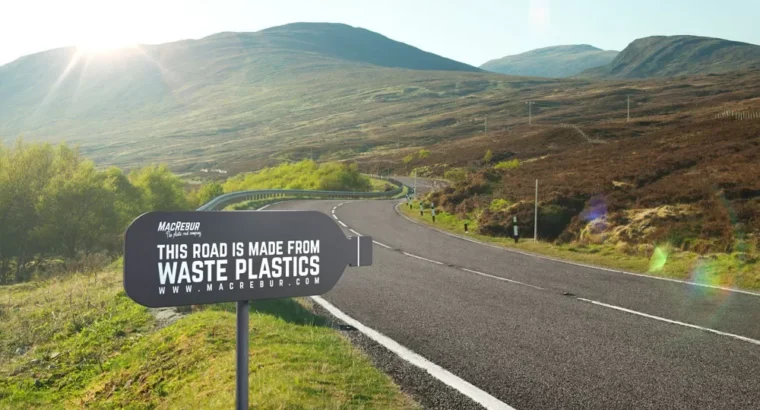
Plastic Road: A Step Towards Eco-Friendliness
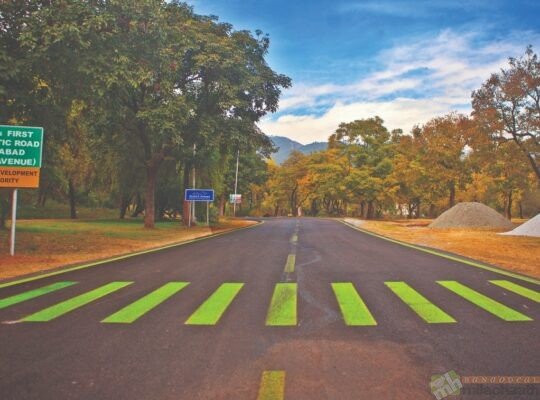
Pakistan has constructed its first one-kilometer plastic road made of 10 tons of recycled plastic waste that has been carpeted near Ataturk Avenue, Islamabad for Rs 21 million. The recycled plastic waste used in the carpeting of the road is part of the “World Without Plastic” program. The project has been implemented by the National Incubation Centre in collaboration with Coca-Cola and the Capital Development Authority (CDA). It is important to note that several countries of the world have already constructed several plastic roads.
The project not just aligns with the World Without Waste initiative but also with the UN’s Sustainable Development Goals of the future. In 2018 the Coca-Cola Company launched the product packaging policy ‘World Without Waste’ whereby the Company will lead the industry to collect and recycle every bottle or can it sells by 2030.
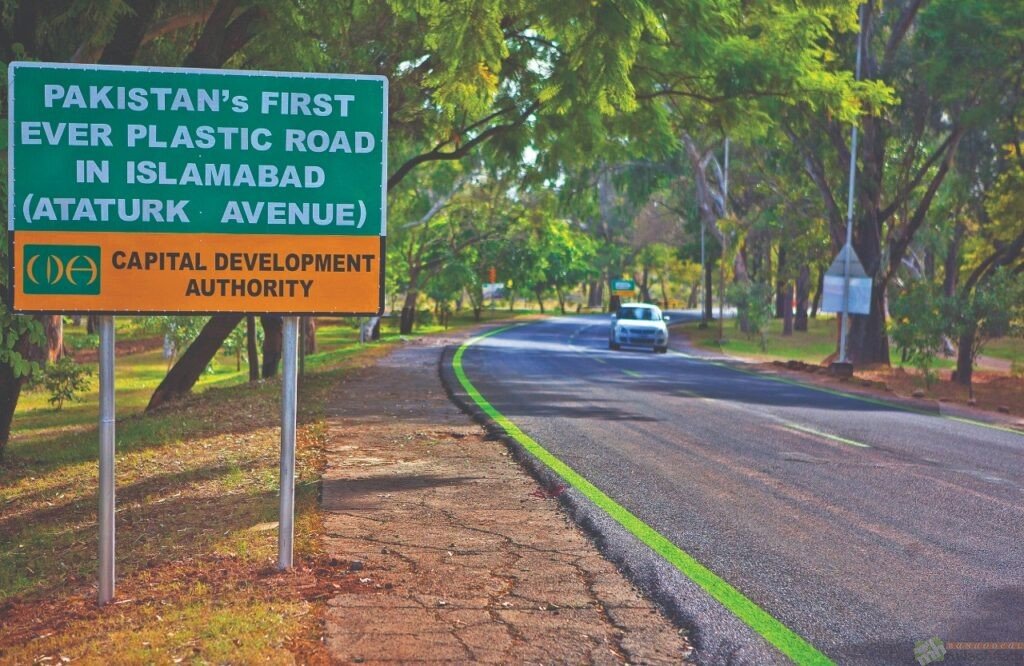
As per the beverage company, it’s a global practice to use plastic to make roads. Moreover, these roads are more durable as reported. The project’s focus to protect the environment and its positive impact on both development and the environment will be on a large scale and will be considered to be non-cosmetic, only if it is scaled up to other roads in rural areas, urban centers, and national highways.
Pakistan is one of the South Asian countries that have the highest percentage of mismanaged plastic and alone produced an estimated 3.9 million tons of plastic waste in 2020. Around 70% of this plastic waste (2.6 million tons) is mismanaged, left in landfills, unmanaged dumps, or strewn about land and water bodies across the country.
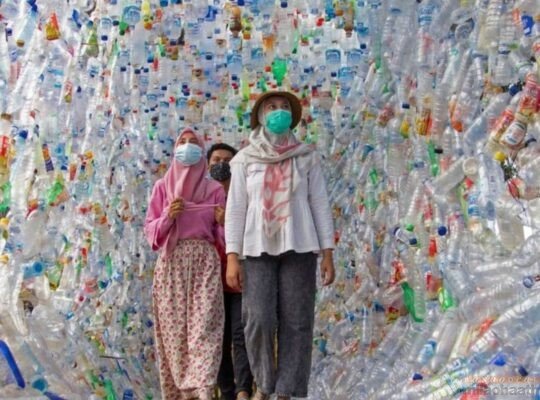
Plastic Waste a Grave Concern
As estimated by the government of Pakistan, 87,000 tons of solid waste are generated per dare, mostly originating from major metropolitan areas. Karachi being Pakistan’s largest city alone generates more than 13,500 tons of municipal waste daily. As a result, all major cities face huge challenges in managing urban waste. Moreover, it is reported that Islamabad, the capital of Pakistan, produces around 700 tons of waste daily together with 150 tons of plastic waste.
Every year around 55 billion plastic bags are produced in the country, most of them destined for garbage dumps, landfill sites, or municipal sewers and around 30 million tons of solid waste is produced, out of which nine percent are plastics. 65 percent of the waste includes that ends water bottles, plastic bags, and packaging ends up on beaches along Pakistan’s coast. As a consequence, there is an increase in plastic pollution in the country that is hazardous for human health and marine life, upsetting food chains and causing land, water, and air pollution.
Plastic waste is a global crisis. It is expected that, by 2050, there will be more plastic in the oceans than fish. Plastics are non-biodegradable and toxic. For this reason, they pose threat to nature. A plastic bottle can take up to 300 years to decompose while a simple plastic bag can take around 500 years. That’s quite alarming, isn’t it?
So effective steps are required immediately at the moment to curtail the usage of recycled plastics to save our country and our planet. This calls for the utilization of an innovative and environmental-friendly solution, that is gaining traction around the world, which has been provided to us by Rajagopalan Vasudevan, an Indian scientist, who first developed this innovative method of construction of roads using plastic waste which is more durable and very cost-effective than regular asphalt roads.
As plastic waste is capable of producing land, air, and water pollution, its recycling is considered to be effective in reducing all kinds of pollution. Of this fact, the utilization of plastic waste in the construction of roads is regarded to be an innovative step leading toward an eco-friendly environment.
Why plastic roads are better than regular roads?
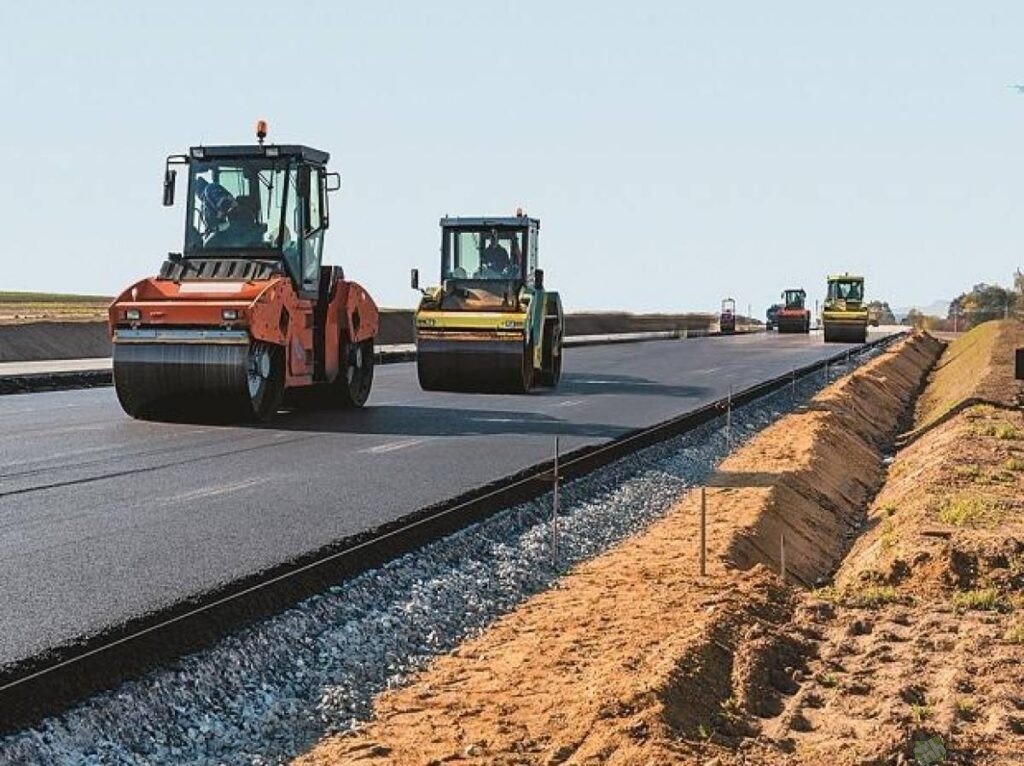
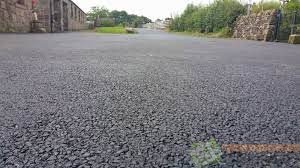
Plastic roads are made differently from regular roads as they are either made of composites of plastic with other materials or entirely with just plastic, whereas, regular roads are made from asphalt concrete, consisting of asphalt and mineral aggregates. According to reports, the Plastic composite roads have existed demonstrated characteristics superior to regular asphalt concrete roads. Plastic roads, precisely, show better wear resistance. The use of plastics in making roads also opens a new option for recycling post-consumer plastics.

1. High Marshall stability value
Increased Marshall Stability value in the construction of plastic roads results in high durability of the road.
2. Prevention of water stagnation
Plastic roads provide better protection from rainwater and prevent water stagnation.
3. Zero UV effect
Plastic Roads do not affect UV radiation.
4. High road load
Plastic roads have a high withstanding load as the strength of plastic roads is increased by 100 percent. This feature helps in satisfying now a day’s need for increased road transport.
5. Decreased aggregation pores
The binding and better bonding of the mixture components in plastic roads is better than in regular asphalt roads. The reduction in pores of the aggregates in plastic roads leads to less rutting and raveling.
6. Asphalt produces CO2
Asphalt streams about 1.6 million tons of CO2 into the atmosphere every year, making up 2% of all road transport emissions, according to The Guardian. So, the use of plastic in constructing roads turns out to be eco-friendly.
7. Flexible pavements and potholes
The aggregate impact value and the quality of flexible pavements are increased by the use of plastic in making roads. The plastic helps the roads to be twice as strong as regular tar roads and the roads are less susceptible to disintegration and potholes than a conventional road as stagnant water or moving water does not affect the surface.
Very well-written!